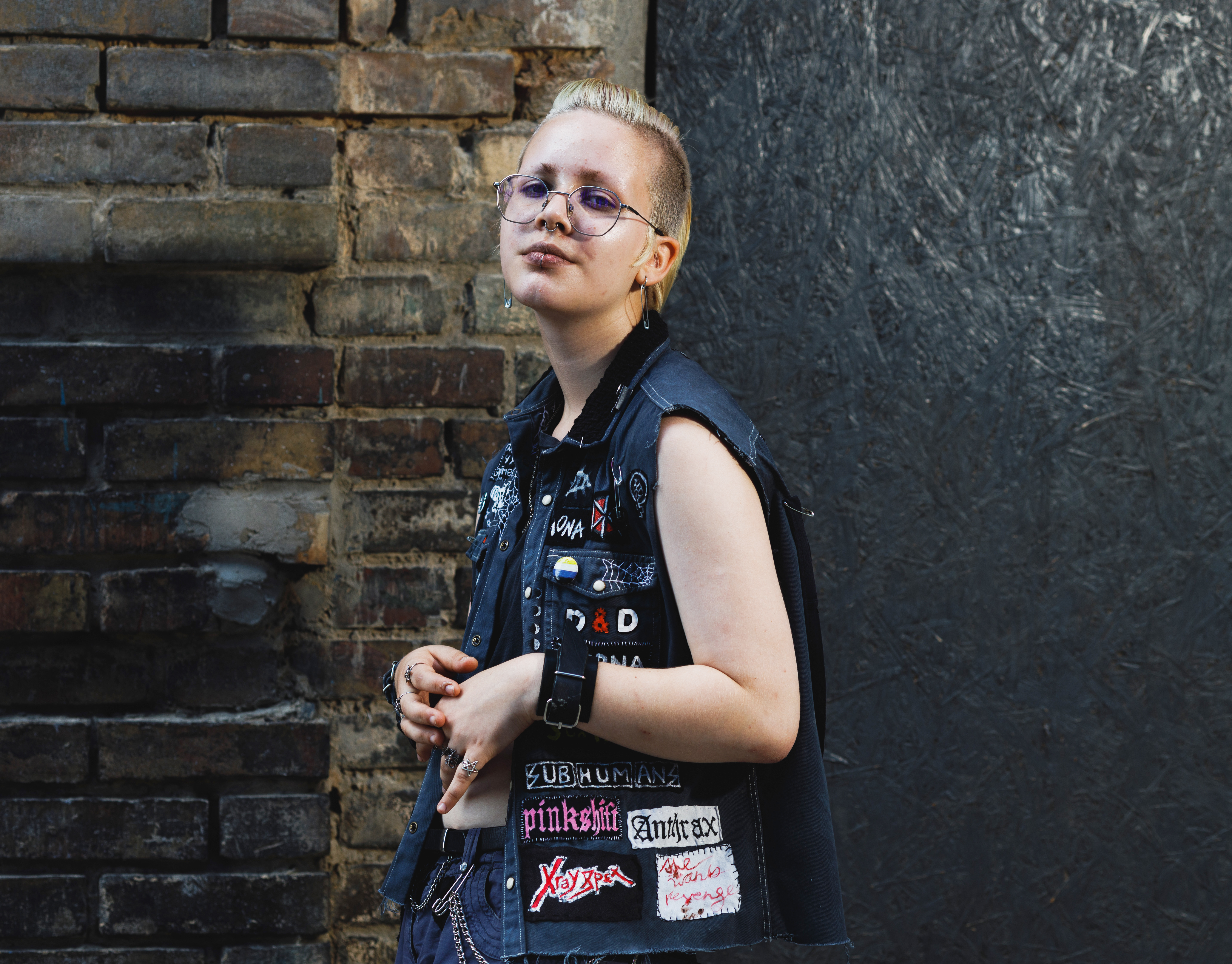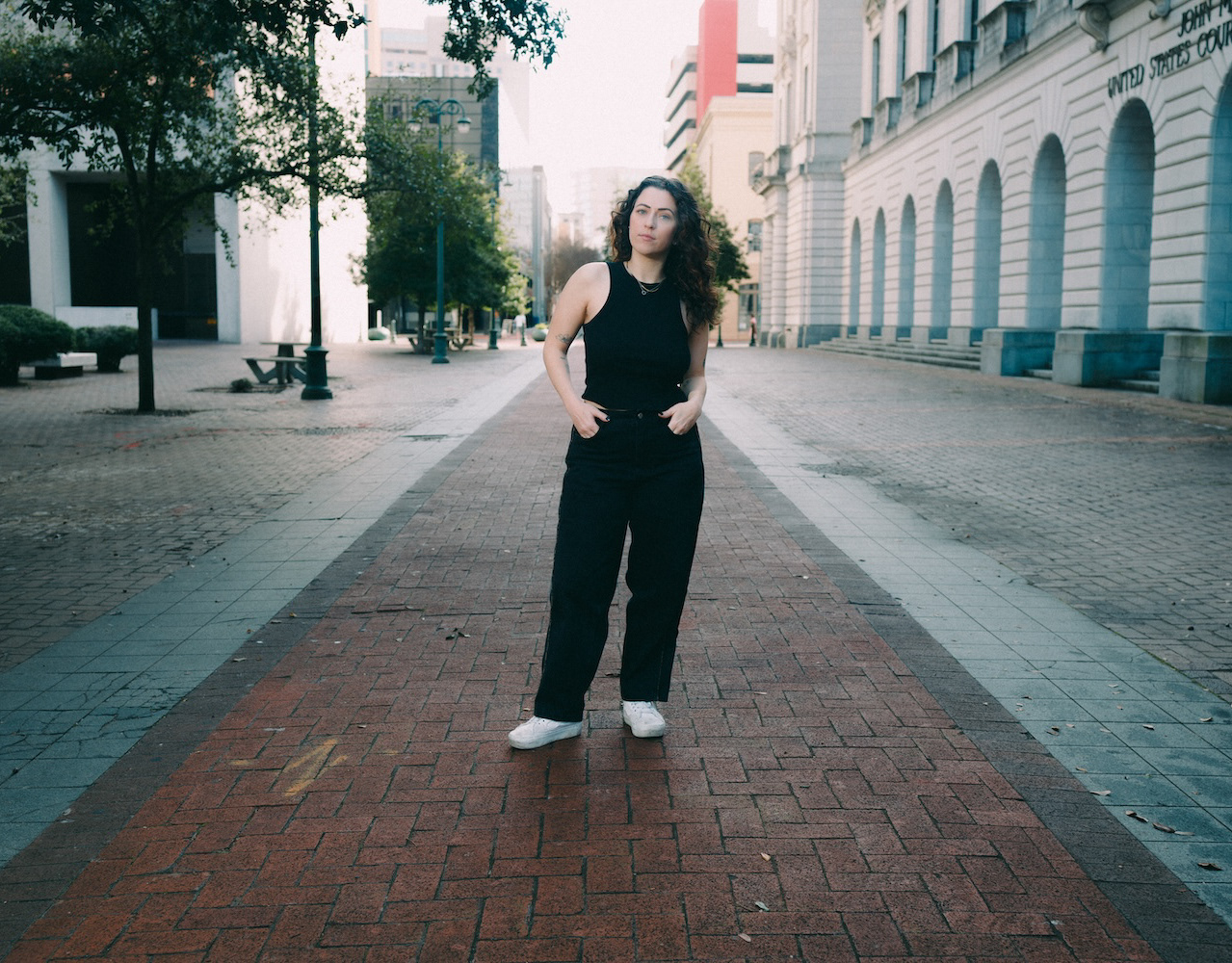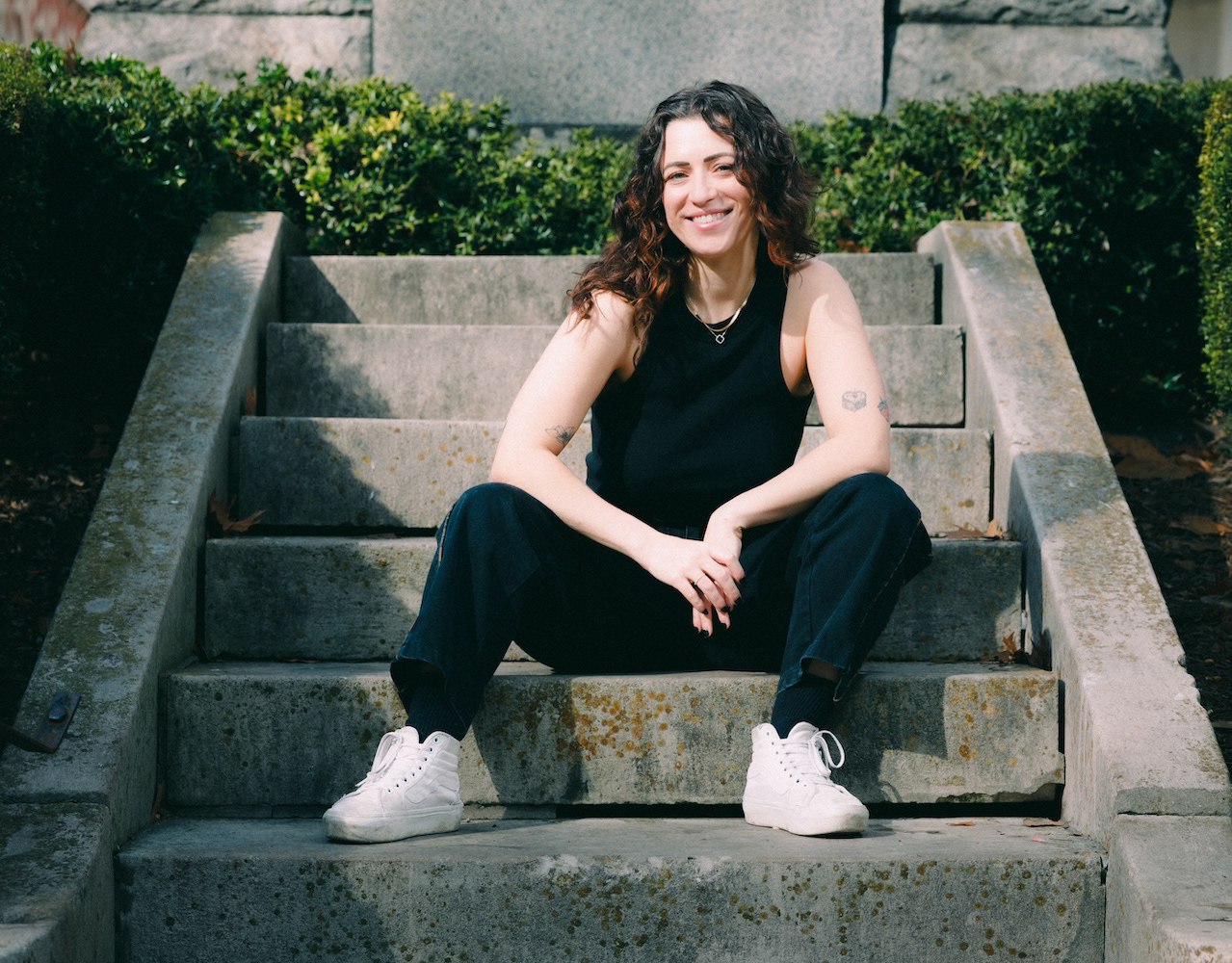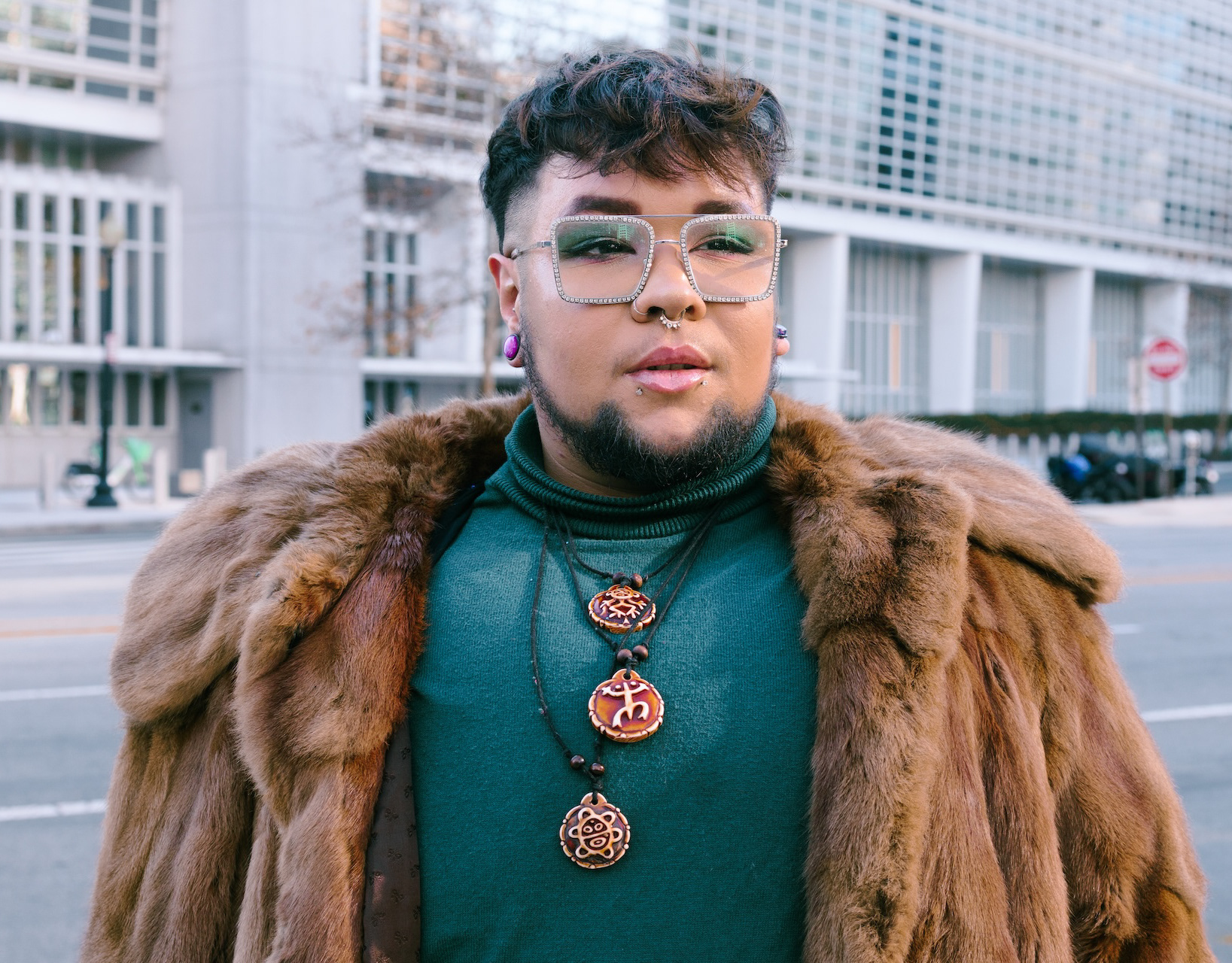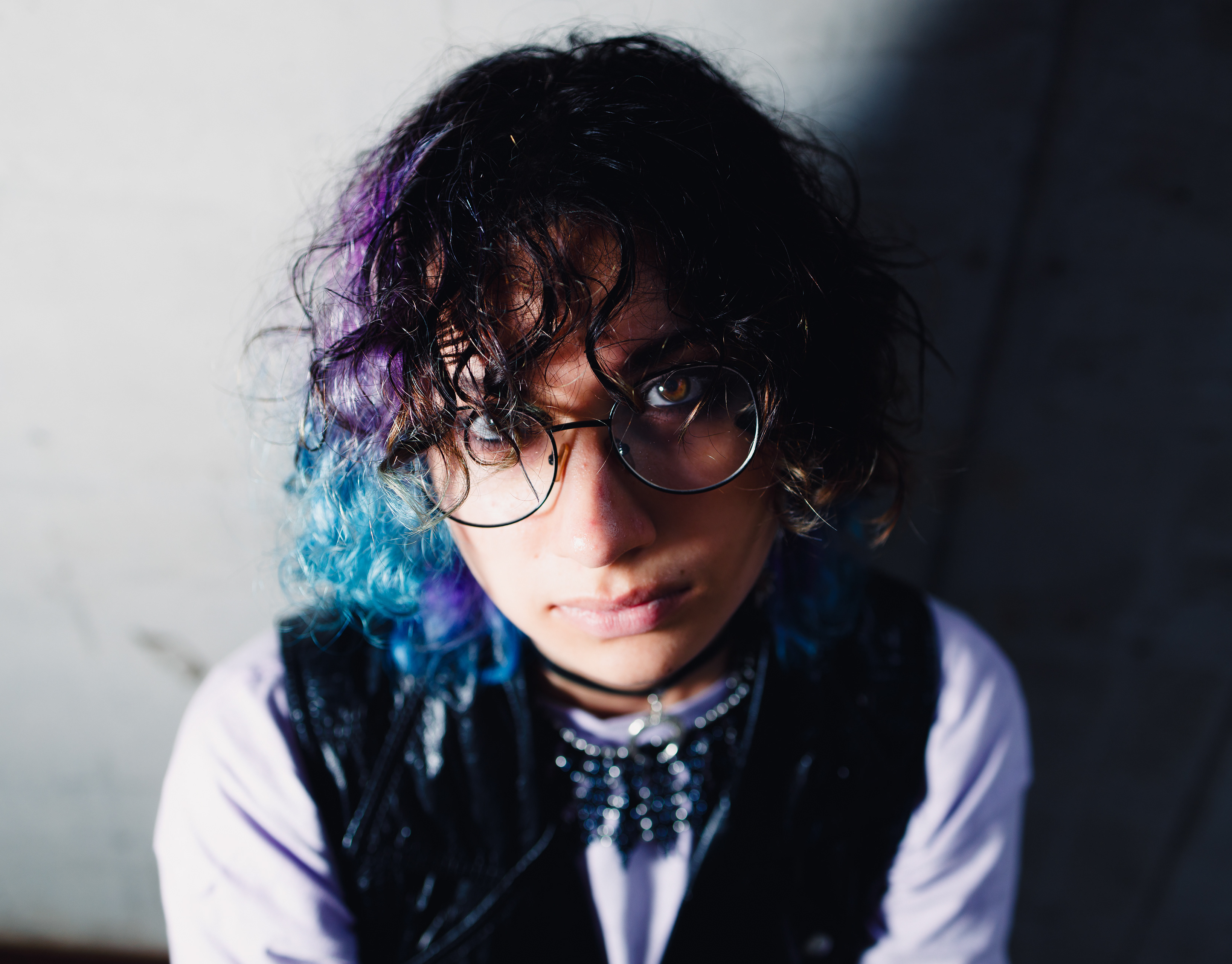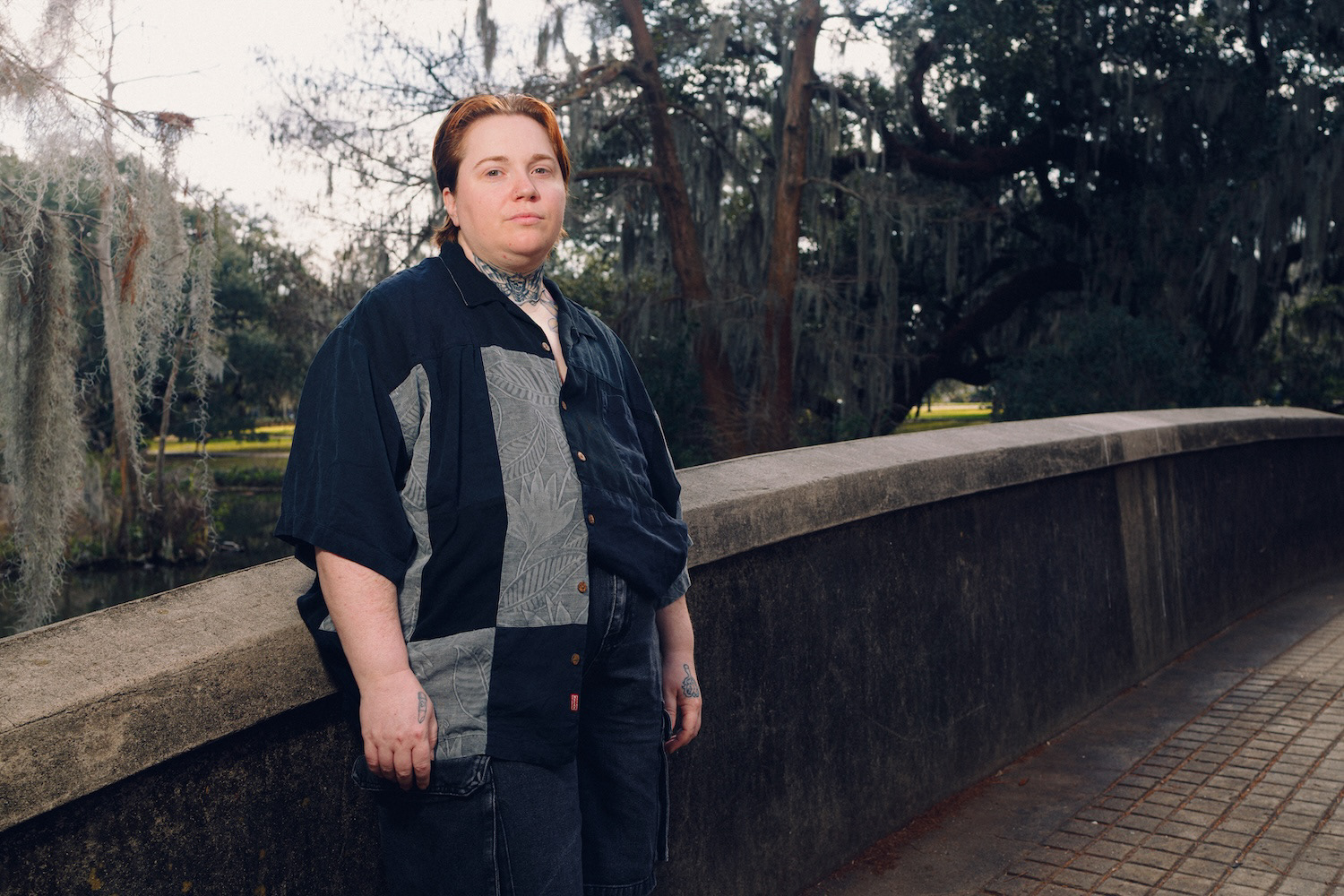
“Looking back, I think I was in feminine drag my whole life — I just didn’t have the words for it yet.” — Hudson (he/they), New Orleans, Louisiana, February 6, 2026. Photo by Saf Homin.
Hudson is a nonbinary, transmasculine community organizer and DJ based in New Orleans, originally from Texas. Through performance, advocacy, and grassroots cultural work, they explore masculinity beyond rigid norms while building spaces of safety and connection for queer and trans communities in the American South.
How did you understand that you’re nonbinary?
It was a gradual process. I grew up in a conservative Southern Baptist family in Texas, with little exposure to queer or trans representation. I came out as queer first. Moving from a small town to Dallas expanded my world — that’s where I met my first openly trans person and began questioning my own gender.
I started experimenting with more masculine presentation and performing in drag and burlesque. Over time, masculinity felt less like performance and more like alignment. I didn’t have language for it at first, but looking back, I see how much of my earlier life felt like playing a role. I came out as trans about eight years ago, in my mid-20s.
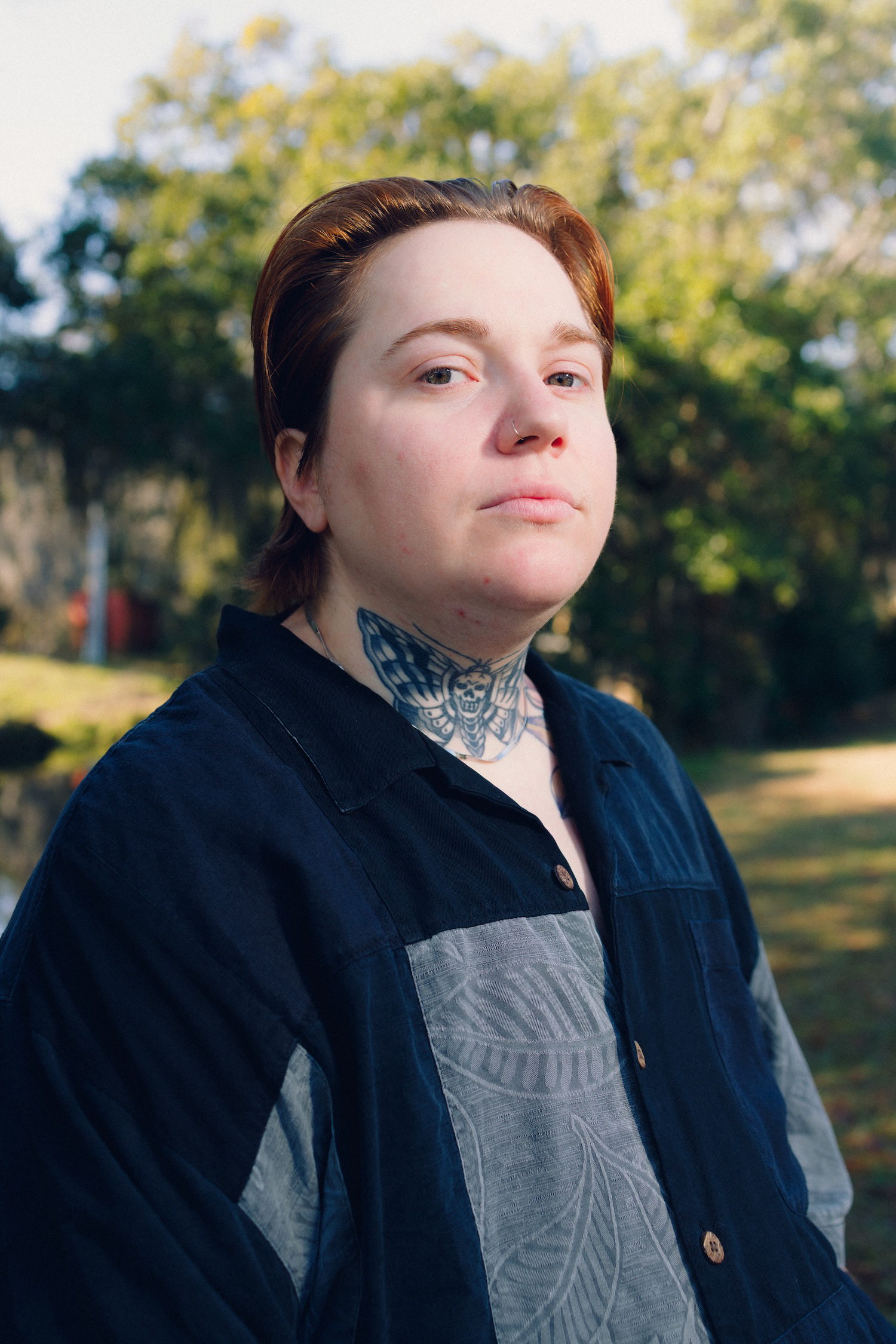
“I’m not a man — I’m transmasc and nonbinary. I’m reclaiming masculinity in my own way.”
What does being nonbinary mean to you?
For me, being nonbinary means I don’t confine myself to any gender construct. At first it was simply that “man” or “woman” didn’t describe who I am. That’s still true, but it’s become more complex as I’ve thought about it more.
It also means there aren’t constraints on how I present or how I identify. I embrace femininity and masculinity. I consider myself transmasc because I align with that a little more, but I still say nonbinary because I’m not a man. I don’t identify as a trans man, even though I present more masculine.
It also means there aren’t constraints on how I present or how I identify. I embrace femininity and masculinity. I consider myself transmasc because I align with that a little more, but I still say nonbinary because I’m not a man. I don’t identify as a trans man, even though I present more masculine.
And it’s about reclaiming masculinity and rejecting toxic masculinity. I’ve had top surgery, and I’m on testosterone in the early stages, and I’m interested in presenting more masculine while also deconstructing toxic masculinity and rebranding it in my own way. I like that nonbinary is broad—there’s no right or wrong way.
How did coming out go with your family, friends, and community?
My friends already knew I was queer and took it well, but coming out as trans/nonbinary was harder with family. My mom was supportive; my dad needed time, though he’s doing better now. About three years ago I started going by Hudson and later changed my name legally. I came out publicly in a Facebook post with my name and pronouns. Overall, queer and trans communities in Texas, Colorado, and New Orleans were supportive, and I found safe spaces quickly.
How does it feel to be on hormone therapy, and was it about dysphoria?
It’s been good. I’ve been on testosterone for two months, starting on gel, and I’m hoping to switch to injections soon. I don’t love needles, but I’m excited. Mentally I feel more grounded, even though I’ve also felt a bit restless, and I’m paying attention to how it interacts with my ADHD. I’m excited about the changes—more facial hair, getting stronger, and possible vocal shifts since I’m a singer.
It wasn’t necessarily about dysphoria. I wanted certain things about myself to show more. The biggest dysphoria I had was my chest, and top surgery was a big part of that. I was on the fence about testosterone because I’m not a trans man and I didn’t want to be read as a man, so I worked through that in therapy. In the end, the pros outweighed the cons, and now that I’ve started, it feels really right—gel felt like easing in, and now I want to keep going.
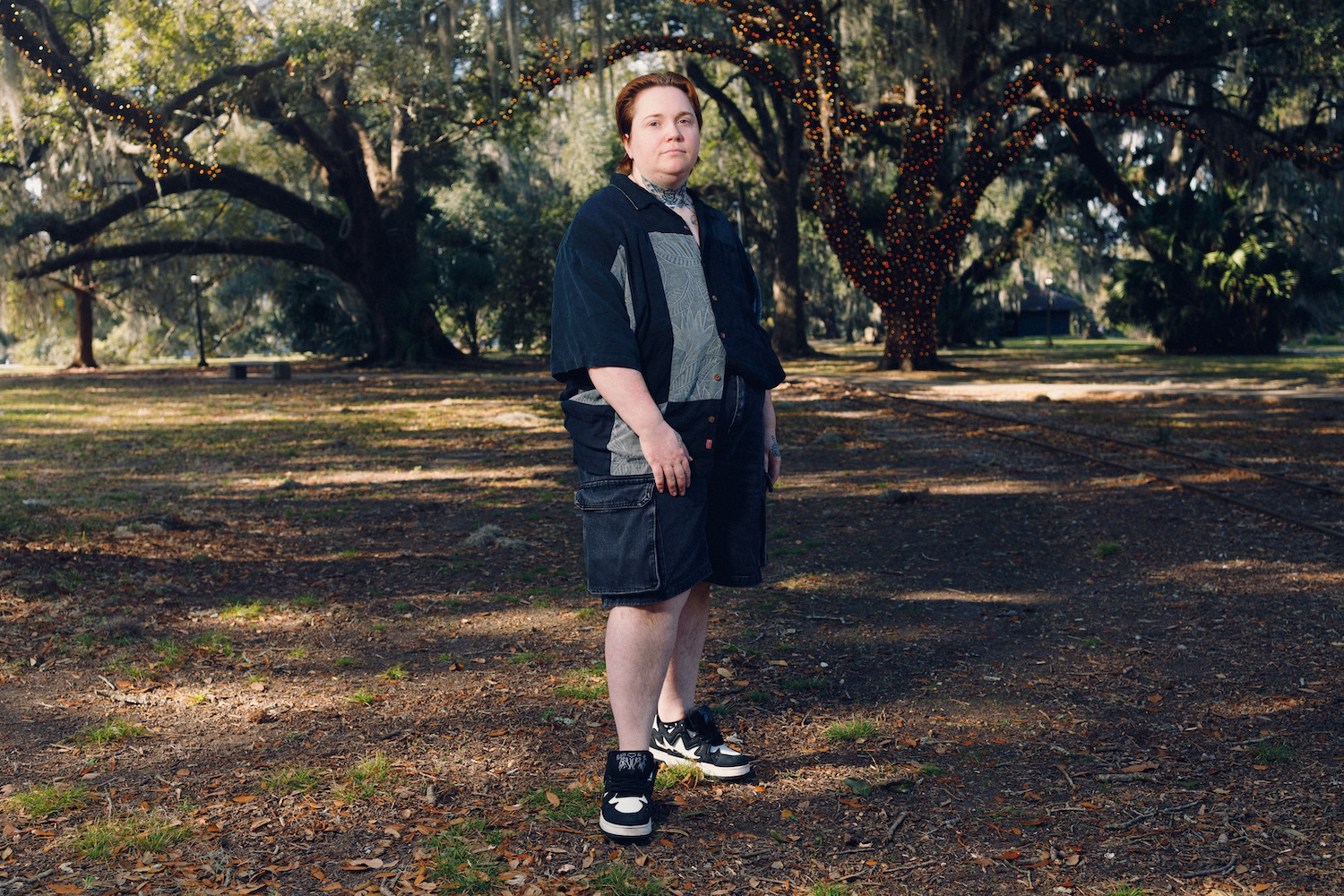
“I don’t confine myself to any gender construct. There aren’t constraints on how I present or who I am.”
How do you feel about the current climate in the US?
It’s tough, especially living in Louisiana. There’s so much trans panic, and we’re being made into villains. And I’m like: I’m just a normal person. I pay taxes, I pay bills. I’m just trying to live my life.
Louisiana has been tough, but New Orleans is its own bubble. It’s pretty much a safe haven for trans people, for the most part. Thankfully, I haven’t had major issues. I do get misgendered—being in the south, it happens. But I don’t take it personally anymore. Other people’s view of me doesn’t change how I feel about myself.
Louisiana has been tough, but New Orleans is its own bubble. It’s pretty much a safe haven for trans people, for the most part. Thankfully, I haven’t had major issues. I do get misgendered—being in the south, it happens. But I don’t take it personally anymore. Other people’s view of me doesn’t change how I feel about myself.
I’ve thought about relocating depending on the political climate—like Chicago or New York City. But at the end of the day, I’m just trying to live and be me. I don’t know why it upsets other people, but that’s on them. I’m going to continue to be myself and be happy.
Can you talk more about Louisiana specifically?
It reminds me a lot of Texas—very southern. Louisiana is a very Christian state, very Catholic, so there’s a lot of stigma around queer and trans people. I’ve lived here for almost three years, so I’ve seen more of what’s happening statewide, not just in New Orleans. Even going just outside the city—across Pontchartrain—it can feel like a whole other world.
Have you faced discrimination beyond misgendering?
Not really, at least not directly. The last time I remember was in my early 20s—some kids at a movie theater made a comment when I was with my girlfriend. I haven’t been hate-crimed or had workplace issues, and most places I’ve worked have been open-minded, including my last job working with trans and queer youth.
You’ve worked with younger generations?
Yeah. Especially in Texas, I did a lot of advocacy for trans youth during the bathroom bill fights and beyond. Trans youth are a main focus of attacks in the US, and people misunderstand what care for young people actually involves—at that age, it’s typically puberty blockers, not surgeries. I actually have a cousin who transitioned young.
I grew up in a very conservative home and still came out queer, so the idea that kids are being indoctrinated doesn’t make sense to me. In Louisiana, there are groups in New Orleans that support trans youth through after-school programs, though I can’t remember the organization name right now. I’ve stepped back from direct advocacy, but my last job was in mental health and substance use treatment, where many of our clients were queer and trans kids. If I’d had resources earlier, I might have recognized I was trans sooner.
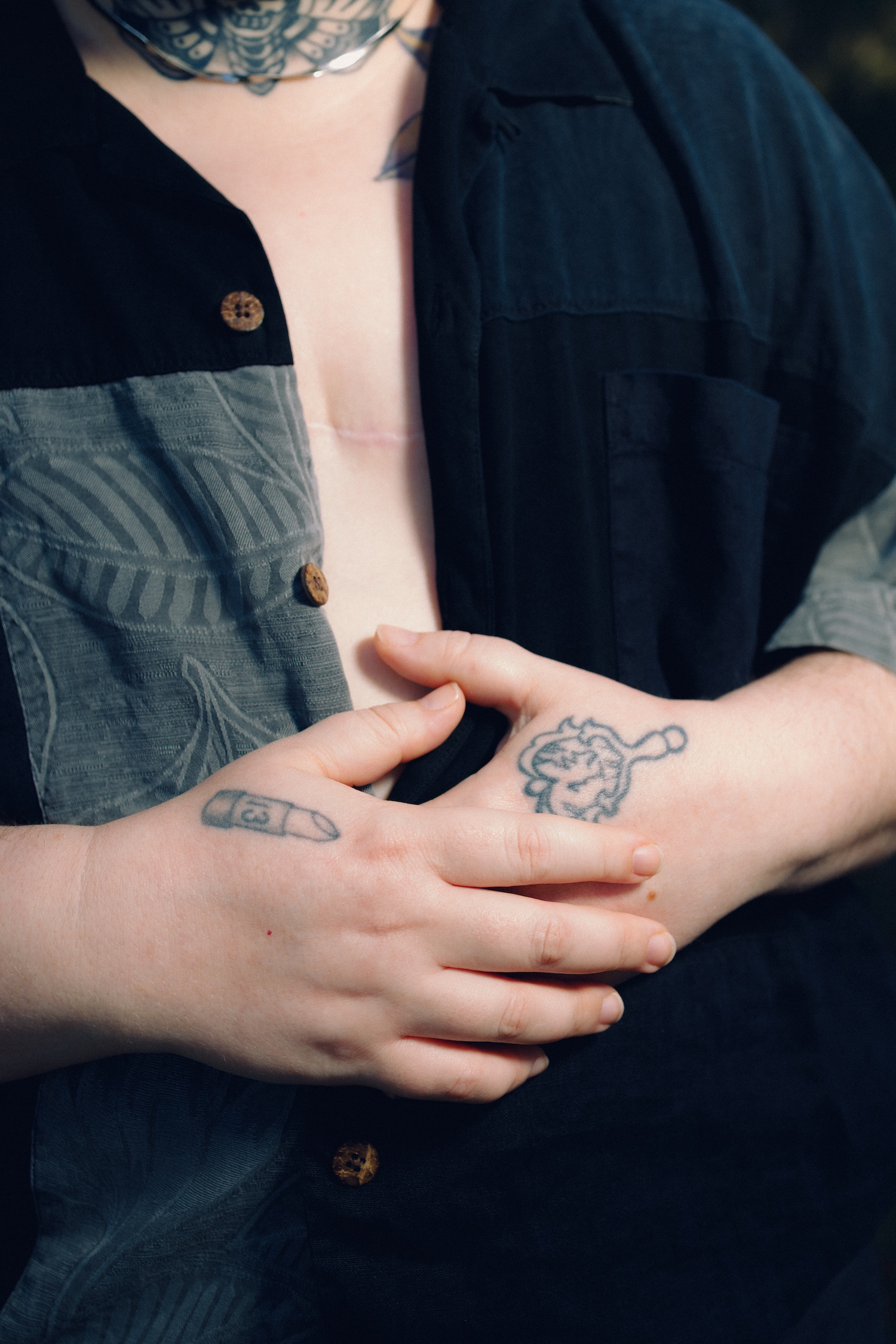
“I’m just a normal person. I pay bills, I pay taxes. I’m just trying to live my life.”
Why do you think substance use is prevalent in these communities?
Substance use and mental health often go together. Because of the social climate, many queer and trans people experience higher levels of stress, anxiety, and depression, and that can overlap with substance use.
There’s also a cultural piece. A lot of queer social life centers around bars, and even Pride events often have alcohol sponsors, so drinking becomes normalized. I’ve seen it personally, including in my own family, and especially among younger people once they reach drinking age. With higher suicide risk and mental health challenges in these communities, substance use can become part of that pattern.
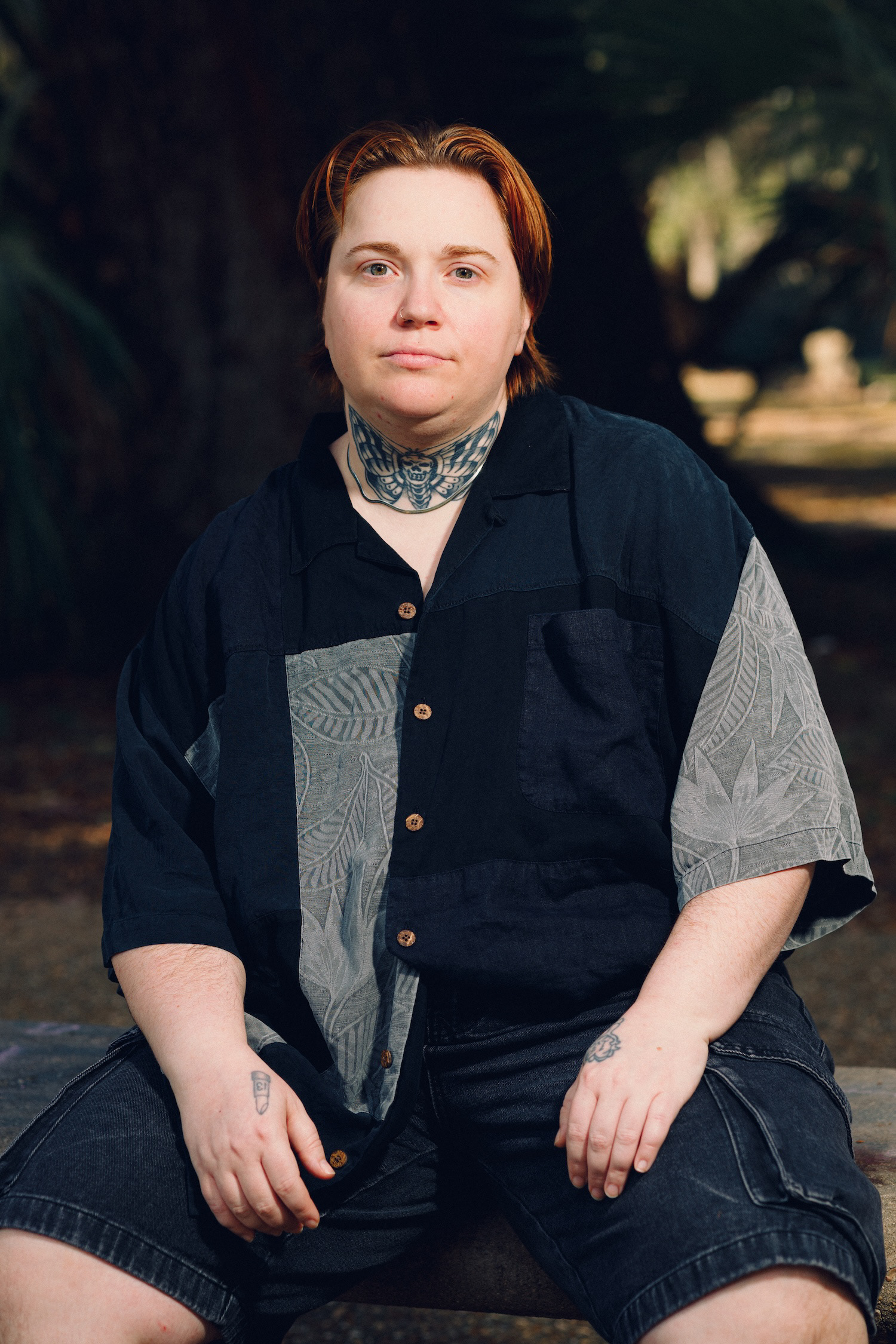
“When the government and society are against us, it matters that we’re together. It’s harder to go after a community.”
What supports you through hard times?
I lean into creativity—art, music, DJing. I did drag and burlesque for about ten years, and even though I do it less now, making things still helps me regulate. Community is the other big support: friends and chosen family, focusing on queer joy and trans joy, and small routines like practicing gratitude. When the news gets heavy, it’s easy to spiral, but being held by community pulls me back. It reminds me I’m not alone in this.
What does it mean to build queer community?
It means creating spaces where people can feel safe and be themselves—unabashedly. That’s why I do a queer honky-tonk night: I love country music, and I want a space where queer people in the South can show up and relax without worrying about someone causing problems. I also helped co-produce a queer variety show because New Orleans has a lot of gay male spaces, and fewer spaces centered on sapphics, lesbians, and trans people. Sometimes people move here and don’t know where to start, or they’re newly out and need a first point of entry. When society is against us, being together matters—it’s harder to go after a community than one person, and we can take care of each other.
Any final thoughts you’d like to share?
As I lean more into hormones, I’ve been thinking about younger people who might read this. I want them to know things can get better. There’s space to grow into yourself over time.
I recently watched a documentary about the AIDS epidemic, and it struck me how many stories were lost—how few elderly queer and trans people we have because of that. It makes sharing our stories feel urgent.
I’m glad to be part of this. I’m 35, and I think it matters to show that you can move through different stages of your life and still keep becoming more yourself.
Interview conducted in New Orleans on January 6, 2026.