This series turns the lens inward. As a nonbinary person, I examine my own experience of growing up outside prescribed gender norms—wearing boy’s clothes on a body perceived as female, collecting rainbow objects while discovering my queerness, and shaping identity against expectation.
Each image carries a personal story and functions as a standalone illustration. Props, gestures, and color choices reflect stages of self-formation and question inherited narratives. The project does not seek closure; it traces the ongoing process of becoming, allowing internal shifts to emerge through controlled visual language.
Thank you to Russ Bray and Annie George for modeling, and to Artem Baidala for technical assistance.

Discrimination happens simply because you are alive. The fact that you exist becomes the reason for it. After death, people rarely discriminate—mostly because they stop paying attention. In life, identity must be negotiated constantly. Even hiding beneath a ghost-like covering does not prevent being read or categorized. For someone nonbinary, sharing pronouns that do not align with their assigned gender immediately exposes them. Even attempts to stay closeted are complicated, because existing as nonbinary is already a visibly different and queer way to live.

This image engages with genderfuck—deliberately reversing and playing with gender norms. Wearing a mustache felt both comical and linked to dysphoria, a way to see how I might look. The moment brought euphoria and discomfort, revealing a version of myself I cannot fully become. In trying it on, I saw I would resemble an Eastern European man; that realization felt awkward and exaggerated, staging masculinity as performance.

I often get confused in gendered spaces like bathrooms when there isn’t an all-gender option. I don’t know which one I’m supposed to use or why. When I arrived in the United States, I saw the first restroom marked for all genders at the Chicago airport—though not all bathrooms are like that. I wish I didn’t have to choose at all. It feels like being an impostor in both.

This image was inspired by a friend whose daughter wants to wear boy’s clothes. It reminded me how I was denied that choice growing up and expected to dress according to a gender I didn’t identify with. For many nonbinary people, clothing is often the starting point for self-exploration, even when options still follow stereotypical gender norms. This photograph is about staying true to my inner child and beginning that exploration on my own terms.

At seventeen, I began collecting everyday objects with rainbow elements—clothes, toothbrushes, anything visibly marked with color. It felt impulsive and comforting, a way to express myself without speaking. I often wore a striped rainbow T-shirt and shorts with small rainbow details while still presenting differently in public. One day, a classmate messaged me privately asking if I was queer. I panicked and denied it. That moment showed how others could sense something I wasn’t yet ready to admit.

In this image, I’m shaving—not out of necessity, but because the act gathers everything facial hair represents for me: dysphoria, the desire to be read as more masculine, curiosity about testosterone, and the urge to inhabit gestures society codes as male. Shaving becomes a quiet rehearsal of gender, a way of testing how close I am to something I want and something I resist at the same time. Performing it felt unexpectedly calm, almost meditative, as if the ritual temporarily suspended judgment and allowed me to exist in my body without explanation.
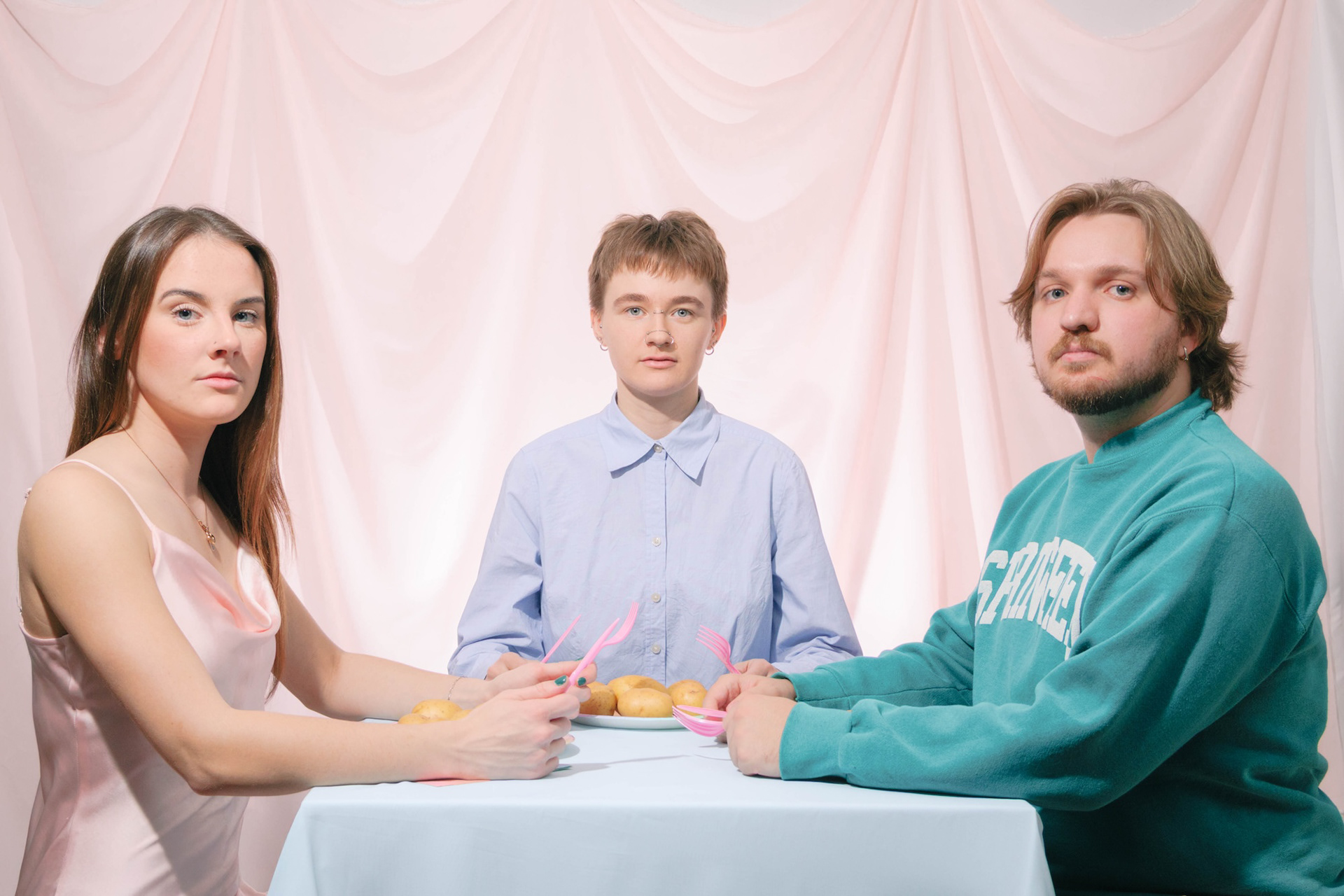
Misgendering shows up in quick assumptions and small jokes. I get it a lot—like when two women at a buffet said, “This young man knows his way around potatoes.” Most people read me as not assigned female at birth until they hear my voice. I choose to live in the androgynous space between masculine and feminine, but stepping outside the binary means people try to label or correct you. Even silence can’t hide you. Existing becomes a negotiation of how you’re seen.


