Asphalt Empire exposes the absurdity of American car culture. Using large-format photography and experimental darkroom techniques, I work with remnants of crashes, fragments gathered from streets, and improvised parking-lot interventions.
Photograms made from metal and glass recovered from wreck sites sit next to layered negatives where vehicles collapse into each other through double exposure. These mechanical remains become evidence of obsession and decay—signs of a system that mistakes motion for meaning. Through humor, accident, and material play, the work traces how the spectacle of the automobile continues to grip the surface of American life.
My relationship to cars carries a kind of transcendental unease. I don’t own one and never planned to. Being here temporarily, I resist that dependency. What began as culture shock—entering a landscape shaped by engines and absence—gradually slipped into something dreamlike. Highways started to feel like suspended zones of alertness, parking lots like monuments to stillness. With time, each commute became less motion and more acquiescence.
The work emerges from that friction between estrangement and fascination, reading car culture as infrastructure, ideology, and collective trance.

The surface becomes the stage.
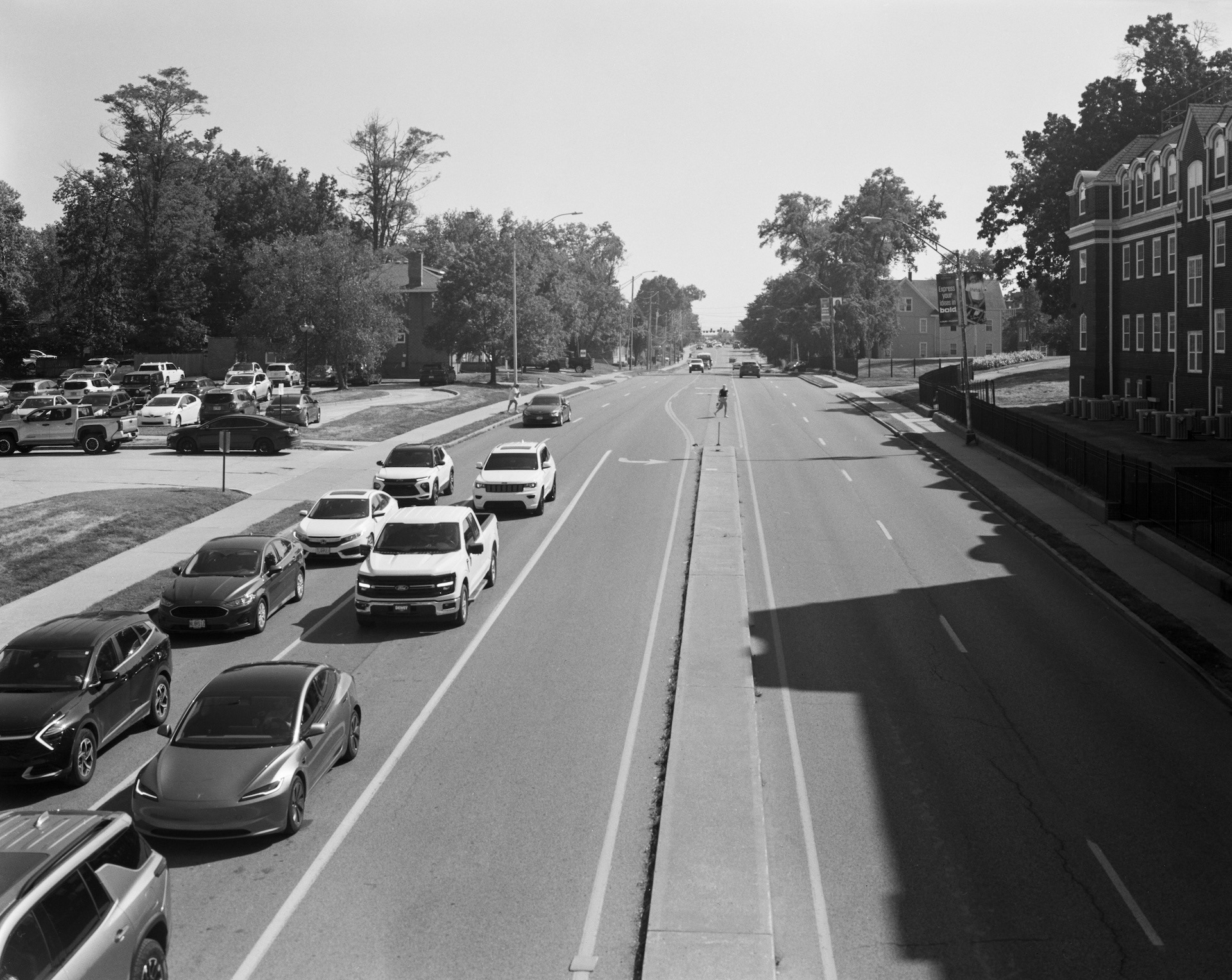


Highways became corridors of half-sleep.


What remains after collision is rarely visible in motion. These fragments—once part of functional machines—survive only in stillness. On paper, they become shadows of an industrial anatomy, disassembled into shape and residue. The photograms reveal what conventional photography cannot: a system stripped of velocity and reduced to parts.

Placed beside a roadside memorial, the fragments turn from evidence into elegy. Impact leaves marks in metal and asphalt, but also in repetition. The gesture shifts—from looking to remembering. One constructed. One lived.


The staged portrait was produced with conceptual and technical assistance from Artem Baidala.


